IATA: Remarks of Brendan Sullivan at World Cargo Symposium 2022
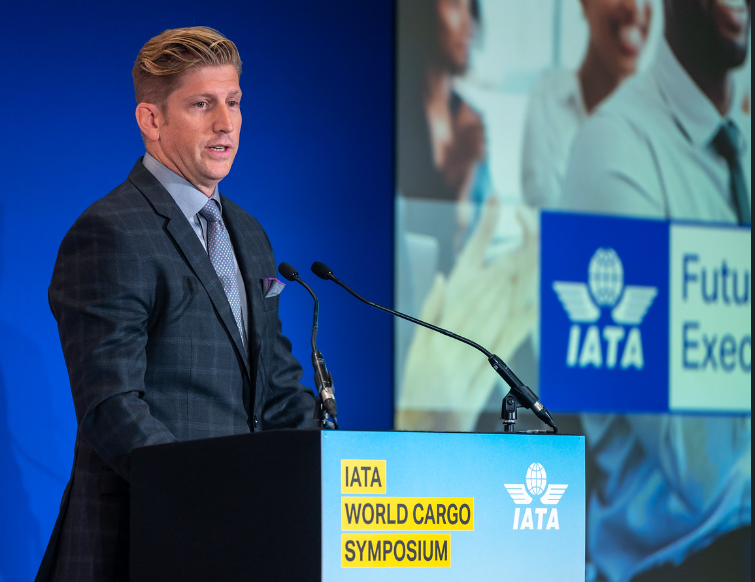
Brendan Sullivan is IATA's Global Head of Air Cargo
Good morning and welcome to the 15th World Cargo Symposium.
Air cargo showed its value during the COVID crisis. It was clear for all that it was a social and commercial lifeline—the backbone of global supply chains, the enabler of e-commerce and best way to distribute high value and critical shipments of medical equipment and vaccines the world knows so well.
As we in the industry have also come to know, air cargo revenue was a financial lifeline. In 2021, air cargo revenues were USD 204 billion. That’s over 40% of total industry revenues—well up from the pre-crisis levels of 12-15%.
Read more: Credible carbon offsets vital to net zero
That exceptional performance could come under some pressure. We don’t need to tell you that challenges are mounting.
- The war in Ukraine has grounded some key players and disrupted supply chains
- Jet fuel prices are high
- Economic volatility has brought inflation, a weaker trading environment, shifting currency rates and slower GDP growth
However, some positive developments to note include
- E-commerce continues to grow
- COVID restrictions are easing, even if slower than we would like
- The strong rebound of passenger traffic brings more belly capacity for cargo
- And high-value specialized cargo, such are pharma products, are proving resistant to economic ups-and-downs
Our chief economist, Marie Owens Thomsen, will provide a more detailed outlook, but the two points that I would like to make are:
- The air cargo industry is in a better place than it was in 2019—financially stronger, more efficient with advances in digitalization, and better appreciated for the heroic efforts that we all made to keep cargo going during a very difficult crisis.
- And the challenges and opportunities that we face are those that we are used to dealing with.
At this World Cargo Symposium, the question is what issues do we need to tackle together? And I would answer that with four priorities.
- Achieving our net zero by 2050 commitment
- Continuing to modernize processes,
- Finding better solutions to safely carry lithium batteries, and
- Making air cargo attractive to new talent
Last year the industry took the monumental decision to achieve net zero emissions by 2050. Now we must turn our commitment into actions to reduce carbon emissions.
We have a balanced plan to achieve net zero. A possible scenario of emissions reduction by 2050 could look like this:
- 65% of our carbon emission reductions could come through the use of Sustainable Aviation Fuel (SAF)
- 13% from new technologies, including hydrogen and electric propulsion
- And 3% should come from more efficient operations and infrastructure
- 19% through offsets and eventually through carbon capture
Air cargo is taking concrete steps…and I will give you four examples….
- BP and Neste have committed to supplying DHL Express with more than 800 million liters of SAF until 2026
- Lufthansa Cargo is buying 1.8 million metric tons of SAF from Shell
- AFKLM Cargo will use SAF to bring Kenyan fresh agricultural and horticultural products into the global markets through Amsterdam
- And FedEx and DHL Express will power 30% of their operations with SAF by 2030
As you can see from these examples, SAF is the key. Airlines have used every drop of SAF that was available in 2021. And it will be the same this year. The challenge is SAF production capacity. And to increase it, we need government support. With the right incentives, we could see 30 billion liters of SAF by 2030. And that would be a clear tipping point towards our net zero ambition of ample SAF quantities at affordable prices.
We also need to be able to demonstrate our progress towards net zero. Every industry is being asked to report on their carbon footprint. And that includes our customers.
So it is critical that we are able to measure our carbon output and report it accurately by shipment. Later today we will announce a major new trial of a standardized and specialized methodology for carbon calculation of cargo shipments, with a view to launching a CO2 calculator for air cargo in 2023
With the right tools and the right policies, net zero is achievable for our industry. As an industry, we have committed. And we are hoping that governments—meeting at ICAO this week—will join us by agreeing to the same long-term goal and provide the supportive policy environment to get there.
Modernization and efficiencyOur customers also expect us to be efficient. They live in a world where they can track their personal shipments in real time. And they are frustrated that the progress in modernizing air cargo is not moving faster. However, good things are happening.
First, the ONE Record standard is being integrated into CASS 2.0 and making it possible for everyone across the industry’s value chain to see the same information on shipments. Already 156 companies and 4 customs authorities are using it. The challenge now is for our IT solution providers to bring the benefits of digital cargo to all supply chain stakeholders.
Secondly, the updated IATA Interactive Cargo Guidance now provides a common framework so that tracking devices can monitor the quality and accuracy of conditions of time and temperature sensitive goods.
You will be hearing about these and other critical initiatives associated with digitalization over the next days. My message is that we should not forget the lessons that we learned during COVID.
The challenges of the COVID crisis gave us confidence that we can change and adapt fast. We need to use that confidence to get us even closer to the expectations for modernization that our customers have. And we need to be true to air cargo’s USP and move even faster!
The modernization agenda also includes governments. Two international agreements brokered through the World Customs Organization are major steps forward in supporting a more efficient regulatory framework for international shipments.
The first is the Revised Kyoto Convention which brings standardization, technology, predictability and speed to trade facilitation. It entered into force in 2006. And the challenge is double, to expand the number of contracting states from the current 131 and to make sure that the contracting states are indeed implementing that Convention. Universal adoption and implementation will deliver the greatest benefits.
A year earlier in 2005, the WCO SAFE Framework of standards to facilitate and secure trade were developed. That 172 states have indicated their intention to implement them shows their importance. There have been several amendments over the years —all of which are also important. And we are starting to see the results that we, and our customers, are counting on. But instead of further revisions, we need more implementation.
Truth be told, we are still seeing far too many diverging requirements by governments in areas that should be harmonized by these two tools. This needs to change quickly so we can continue to support global trade—and its vital contributions to economies and the UN Sustainable Development Goals—with modern and efficient air cargo.
SafetyWe also need to keep moving fast on safety issues. The war in Ukraine brought to the fore the importance of safe handling of live animals as many refugees travelled with their pets. The IATA Live Animal Regulations proved fit for purpose as did the CEIV Live Animals certification. And we quickly supplemented this with special guidance to support refugees traveling with their pets. This was a success story of which we can be proud.
We can also be proud of the progress that we are making to further improve on the safe handling of lithium batteries. For air cargo, this is absolutely a top priority. And, over the last year, we were reminded of this by several high-profile incidents. We are making some good progress to ensure that the lithium batteries that are carried as cargo are compliant with regulation.
- The Dangerous Goods Regulations are the starting point. And with DG Autocheck we are making verification that the shipment complies even easier and more accurate.
- From 1 July 2022, changes made to standards for Consignment Security Declarations will align security standards and safety approaches for regulated agents to create a stronger overall framework for managing shipments.
- And we have launched CEIV Lithium Batteries to embed best practices across the value chain. Later today we will honor the pioneer airline and ground handler—LATAM and SATS—with the first CEIV Lithium Battery certificates.
And to better handle any incidents that might happen in flight, we are working with EASA and the US FAA to develop a test standard that can be used to demonstrate the capabilities of fire resistant containers and containment covers.
But even the best regulatory structure means nothing if the rules are not followed. Compliance is an issue with the transport of lithium batteries, particularly with the proliferation of new—and inexperienced—entrants in e-commerce activities.
The was highlighted in the results of the 2022 Global Dangerous Goods Confidence Outlook survey run with Labelmaster and the Hazardous Cargo Bulletin. I would draw your attention to three key takeaways:
- We need to continue to press (and help) regulators to crack down on rogue shippers.
- We must all look at our own organizations to note our strengths and improve on our weaknesses, and
- We can be encouraged that training is an accessible and affordable solution to many of the issues identified.
The last topic that I will address is people. People are at the core of any improvement in what air cargo can deliver. And these last years of COVID have been brutal. For those who worked through the crisis, it was challenging. That is particularly true for our crew who had to deal with extraordinary measures when operating across borders. And, sadly, we also saw thousands of jobs leave the industry, especially cargo handlers.
We are now competing for talent in a very tight jobs market. And when we do find the right and willing talent, training and longer-than-usual security clearance processes delay their entry into the workforce. You know far better than I that we are facing a severe skills shortage. A short-term solution would be accelerated clearance processes by governments. Longer-term, we need to do a better job of attracting, onboarding, and retaining talent. We are working with two of our important industry partners, the International Federation of Freight Forwarders (or FIATA) and TIACA on how we will, together as an industry tackle this challenge.
And we need to keep supporting two critical initiatives which you also hear more about at this symposium:
- The Future Air Cargo Executive (FACE) program which provides a forum for executives under 35 to network and exchange ideas to lead our industry’s next chapter
- And the IATA 25 by 2025 which aims to increase female participation across the industry, particularly in leadership roles. We will not have the people we need to drive the industry forward if we do not fully take advantage of half the world’s population that is female. If you are not already among the 125 signatories to the 25by2025 pledge, I encourage you do so today.
I have spoken of many challenges. There is real and hard work ahead for all of us. And global economic and political developments could well make the going even tougher. But it will be nothing compared to what we have been through with COVID-19. And there is much to motivate us.
Everyday air cargo supports the global supply chains that secure the jobs of hundreds of millions of workers around the planet. Among the important cargo that we deliver are medicines and vaccines. During the pandemic, in times of crisis and natural disaster, the humanitarian aid we carry can be lifesaving.
Air cargo also contributes to 7 of the 17 UNSDGs—critical enablers of a better future for all.
There is no greater motivation than knowing concretely that with every shipment that we deliver we help people to live better lives and secure better futures.
Press office IATA
Джерело інформації: www.aviation.com.ua