Aircraft Lighting: The Rules And Roles
The lighting system on an aircraft is a key system.
Photo: Embraer
The lighting of an aircraft is a key system. External lights are required for safety purposes as they are used to alert the personnel working around the aircraft in low light hours. They also allow aircraft identification in flight, and some lights also help the pilots to navigate the aircraft on the ground and help to view certain structures of the aircraft.
In this article, the main focus will be on the external lights. However, we will briefly discuss the cockpit lighting as well.
Read more: Antonov An-225: It Will Cost At Least Ђ500 Million To Rebuild The World’s Largest Airplane
In an aircraft, there are several external lights. Some of these lights are there by the regulations. This is specified in the EASA SERA (Standardized European Rules of the Air), section 3, chapter 1.
A summary of the rules for lighting is as follows:
- All aircraft must have an anti-collision light intended to attract attention to the aircraft (both day and night operations)
- All aircraft must also have navigation lights intended to indicate the relative path of the aircraft (during night operations)
- The aircraft must have lights that illuminate the extremities of the aircraft (during night operations)
- When towed or taxied on the movement area of the aerodrome, the aircraft shall display lights intended to attract attention (fulfilled by anti-collision lights or strobes)
- All aircraft in the movement area of an aerodrome whose engines are running shall display lights to indicate that fact (fulfilled by anti-collision lights or strobes)
- A pilot shall be permitted to switch off or dim any lights on an aircraft that could adversely affect his or her performance or the performance of an outside observer (such as a pilot in another aircraft).
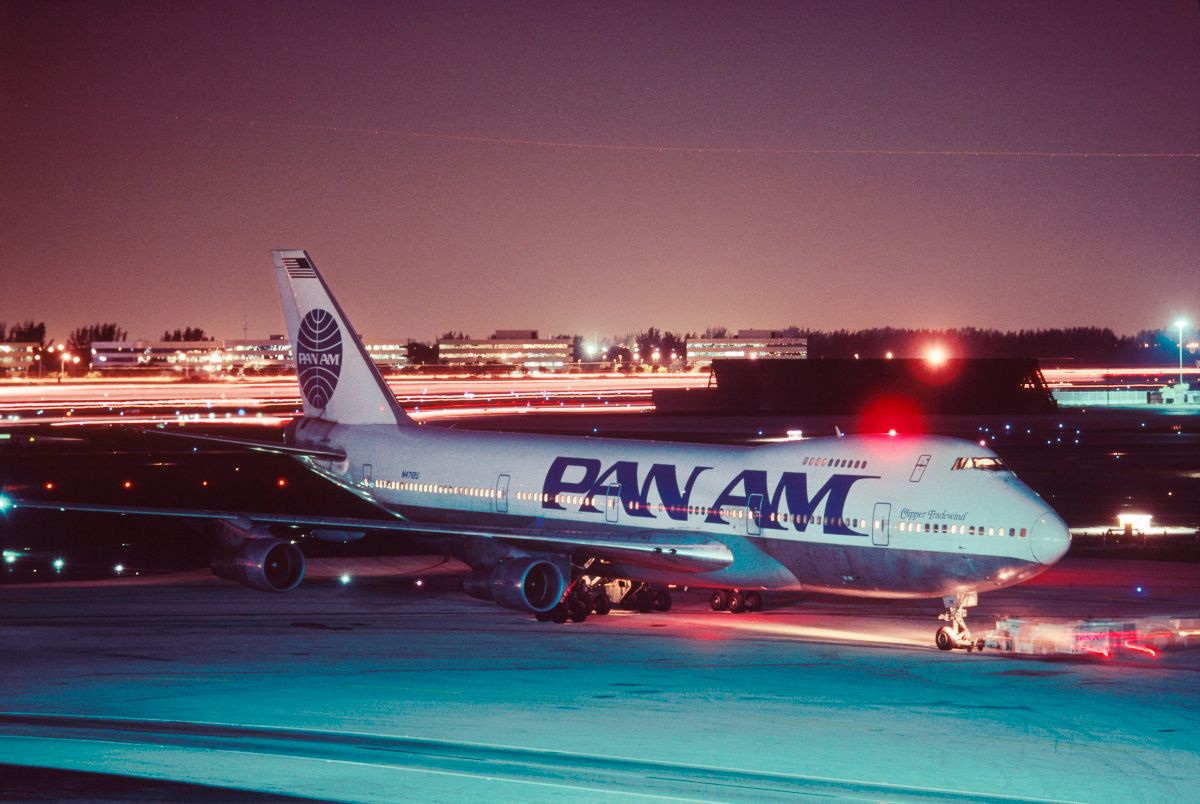
Photo: Getty Images
The types and roles of external lighting
There are many lights outside an aircraft, and each of these lights serves a different purpose.
Anti-collision lights
In most transport category aircraft, there are two anti-collision lights. One is called the beacon and the other is called the strobe. A beacon is a red flashing light. In many aircraft, there are two beacon lights - one on top of the fuselage and the other on the belly of the aircraft.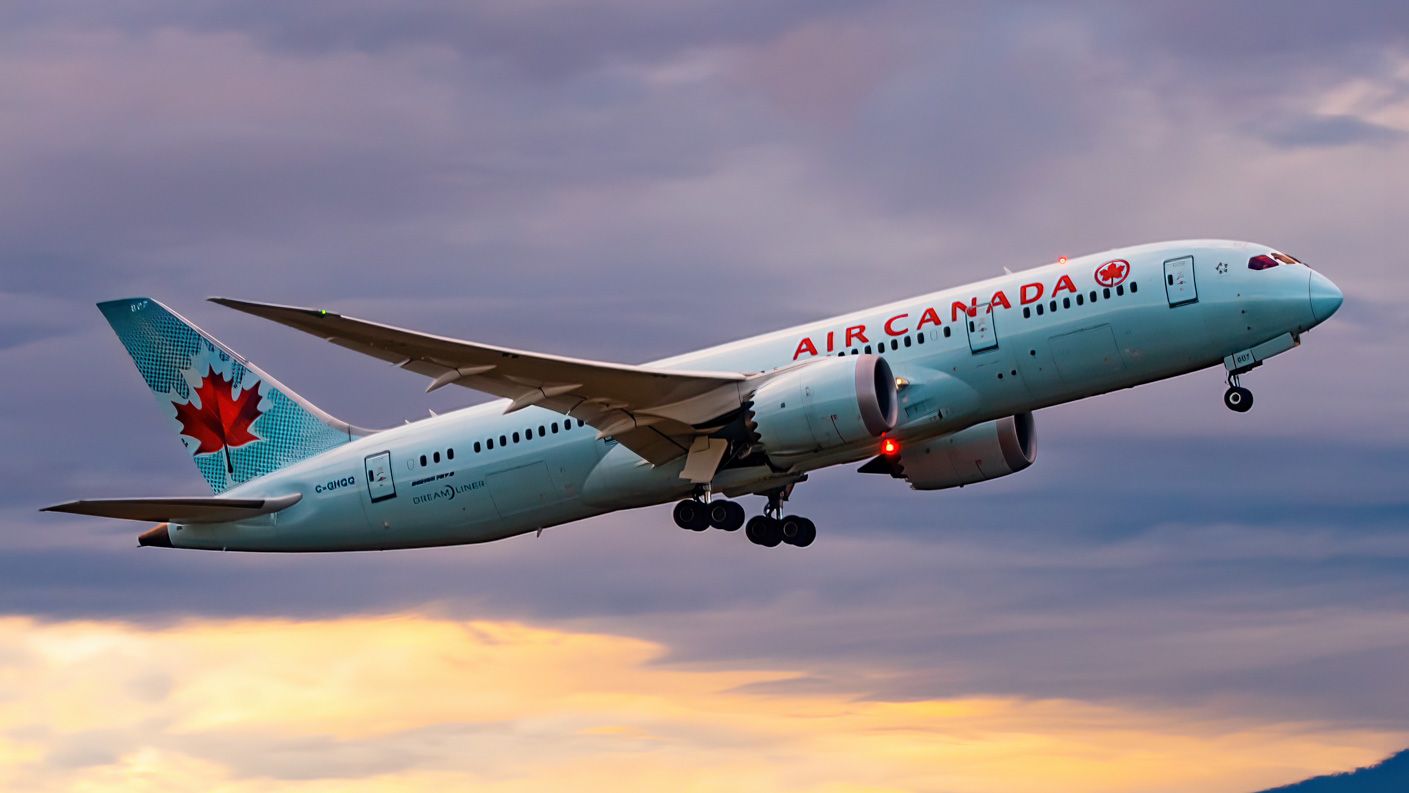
Photo: Joe Kunzler | Simple Flying
Strobes are synchronized flashing white lights. There are three strobe lights. One at the extremities of each wing, and one below the tail cone of the aircraft.
In normal operations, the beacon(s) are used on the ground and in flight. They are turned on during the pushback and remain on until the last engine is shut down. The strobes, on the other hand, are only turned on when lining up on the runway for take-off. This is because the very bright flashing characteristics of the strobes can be a nuisance for those working around the aircraft and other workers in the apron area..jpg)
Photo: John Murphy via Wikimedia
In some smaller aircraft, there are no strobes. They only have the beacon. In others, only one light can be switched on at a given time. You either have the option to turn on the strobe or the beacon. The Dash 8 classics are an example of this. Thus, when on ground operations, pilots have the red beacon on, and once on the runway, they turn on the strobes, which switches off the beacon.
Navigation lights
The navigation lights, also called the position lights, consist of three lights - one on each wing and the other on the tail cone. The navigation lights on aircraft are like the ones on ships and other sea vessels. The port or the left-wing light should be red, and the starboard or the right-wing light should be green. And finally, the one on the rear (astern) or the tail cone must be white. They help an observer to identify which direction the aircraft is heading.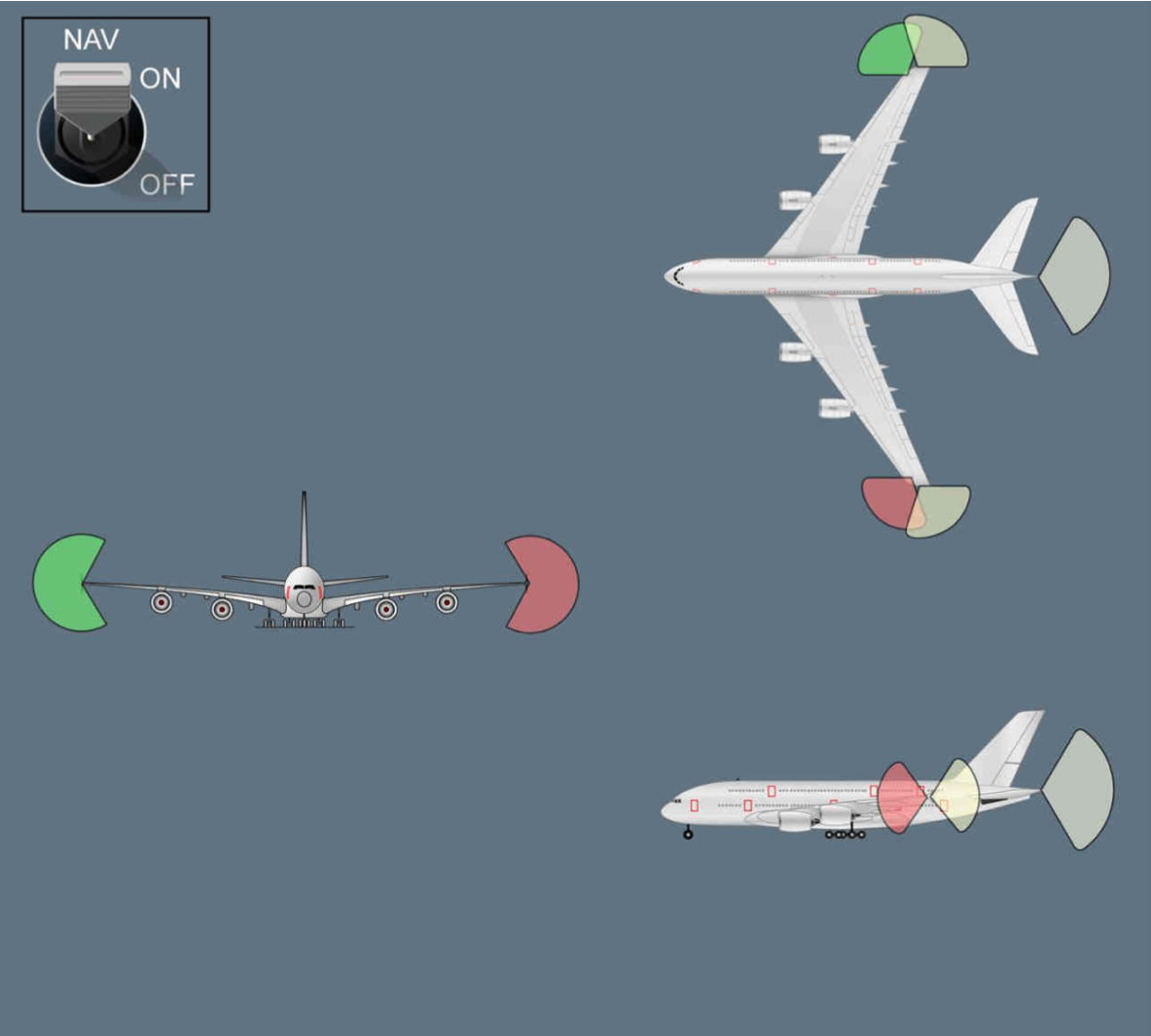
Photo: Airbus A380 FCOM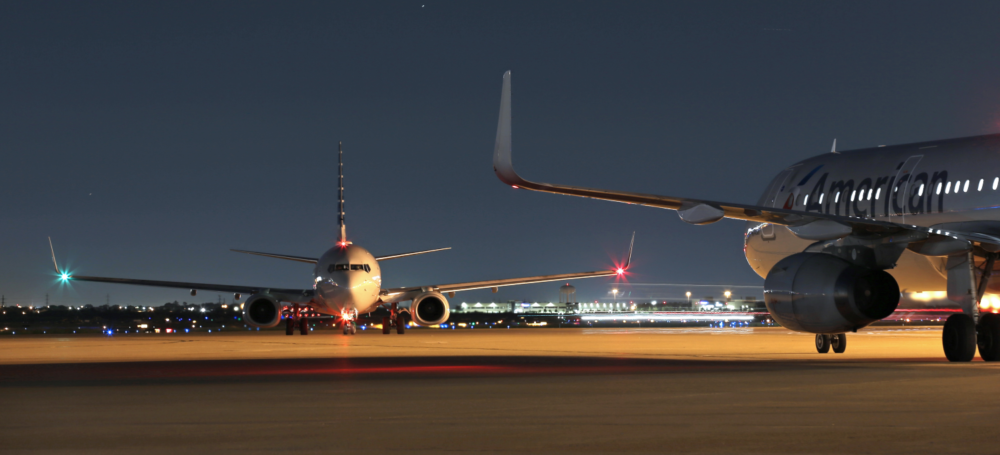
Photo: Dallas Fort Worth Airport
These lights are not a must for day operations, but they must be available for night operations.
Landing lights
These lights are used to aid the pilot during the landing maneuver. The landing lights must be installed such that:
- No objectionable glare is visible to the pilot
- The pilot is not adversely affected by halation
- Provides enough light for night landing.
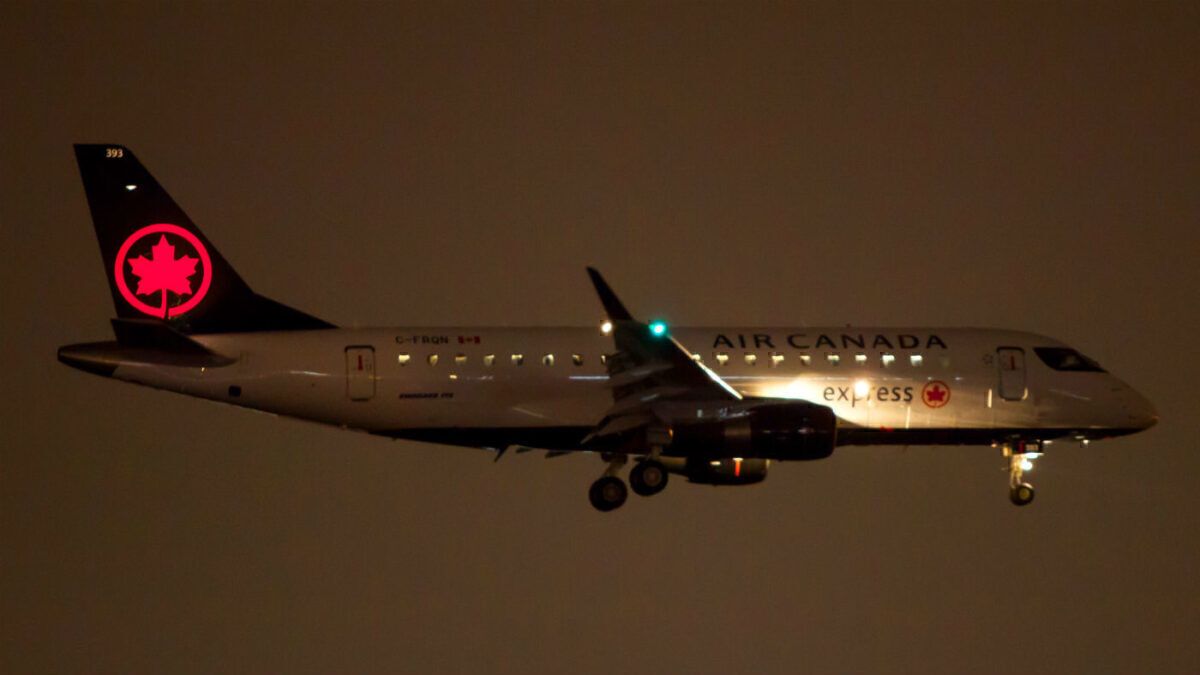 Photo: Sky Regional
In some aircraft, the landing lights are retracted into the wing when switched off. In these aircraft, when the lights are switched on, the lights extend out of their housing and shine. Experienced pilots can feel the change in noise and vibration when landing lights are turned on for these aircraft. Modern aircraft have the landing lights flushed to the forward fuselage belly or the wing root. This reduces drag. The Airbus A320 has retractable landing lights. However, some recent models of the aircraft are available with flushed lights.
The landing lights are not only used for landing. Many operators have policies that urge the pilots to keep the landing lights on whenever the aircraft is below 10,000 ft. This helps to attract attention, as below 10,000 ft, there may be a lot of airplanes flying around in close proximity.
Taxi lights
The taxi lights are lights that help the pilot to navigate the aircraft during taxi. Even though they are helpful only in night operations, pilots keep them on when taxiing, even during the day.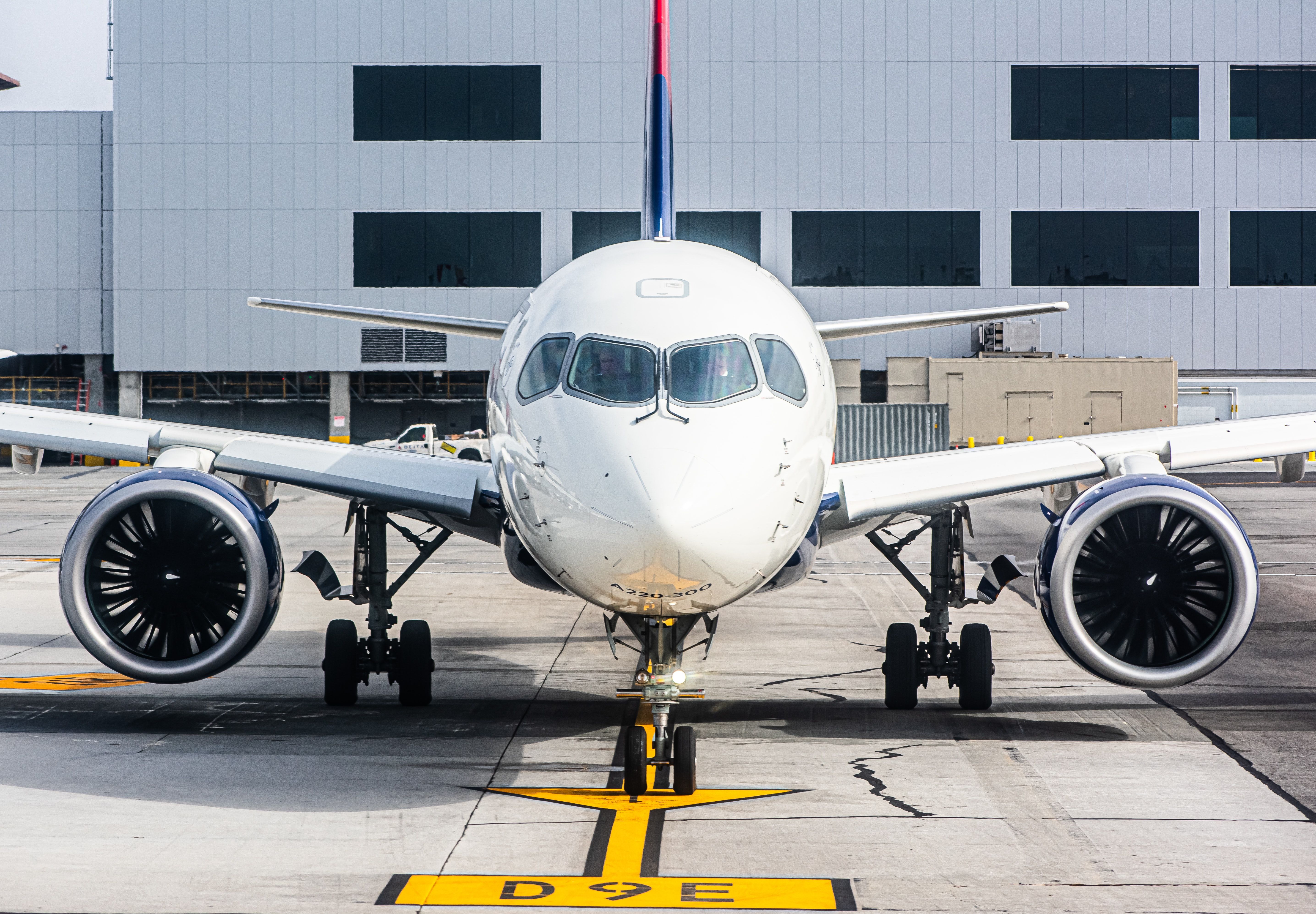
Photo: Lukas Souza | Simple Flying
When the aircraft is stopped during the taxiing phase, it is recommended to switch off the lights so as not to distract other pilots who are taxiing around. This is not mandatory. However, following this soft rule shows airmanship.
Take-off lights
These lights are like taxi lights, but they have a longer beam. As the name suggests, they are used when the aircraft is rolling for take-off. They give the pilots an extra bit of situational awareness and make the aircraft more visible.
Runway Turn-off lights
The runway turn-off lights are usually found on the nose landing gear and are at angles of 45 degrees. They help to view the runway and the taxiways during turn maneuvers.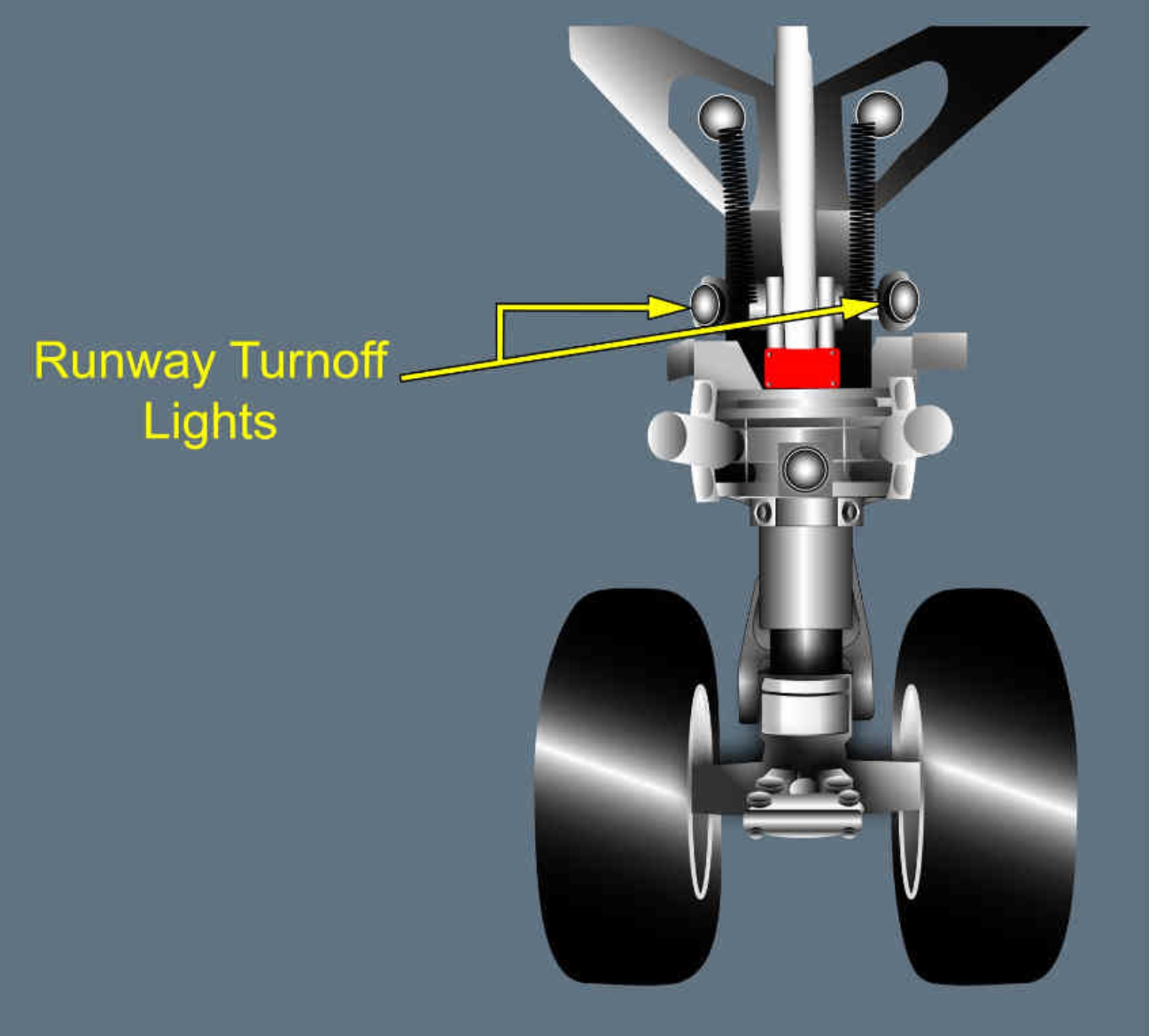
Photo: Airbus A380 FCOM
Logo lights
The logo lights are placed on the upper surface of the horizontal stabilizer of the aircraft. When turned on, they shine up the airline colors. They again help to attract attention and, at the same time, they are great for advertising when the aircraft is on the ground at night.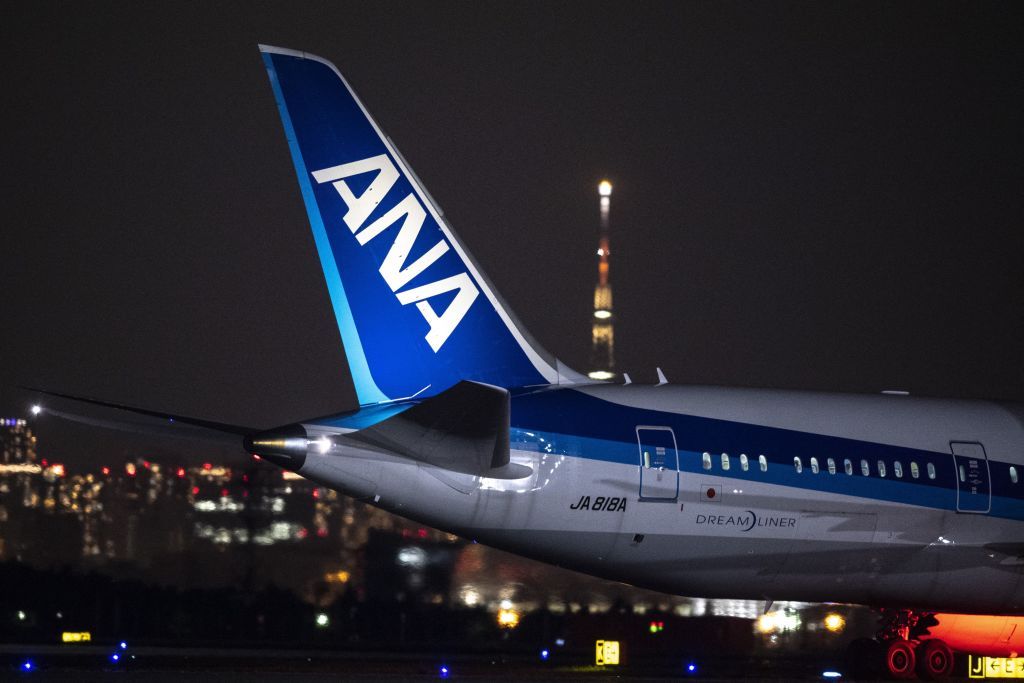
Photo: Getty Images
Wing and engine inspection lights
The wing and engine inspection lights are used to view the wings and the engine intake for possible icing. These lights are a must as per the regulations if the aircraft is certified to fly into known or forecast icing conditions.
These lights must be able to illuminate the wings both in and out of the clouds on night flights without excessive glare.
The wing and engine inspection lights can be found on the side fuselage near the wings.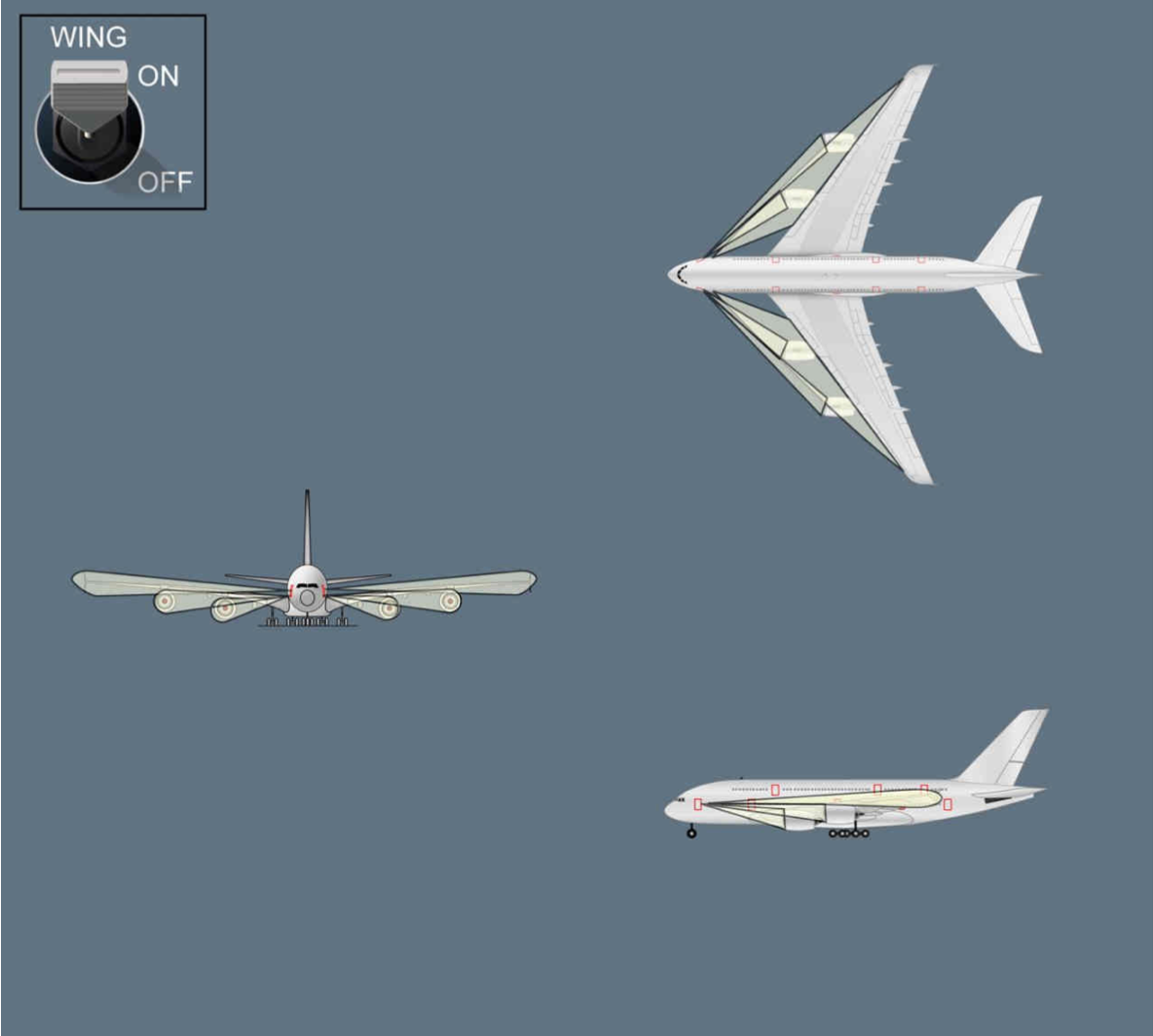
Photo: Airbus a380 FCOM
The cockpit lighting should provide sufficient illumination to make each instrument, switch, or other equipment necessary for safe operation easily readable. The lighting must be installed such that their direct rays are shielded from the pilot’s eyes, and no reflections are visible to the pilot. The pilots must also be provided a means to dim the lights for their comfort.
These are the minimum requirements. However, in a modern cockpit, a lot more lights are provided. These include map lights, dome lights, storm lights, etc. During night operations, a dim cockpit is the preferred one, particularly when coming in for the landing and during take-offs.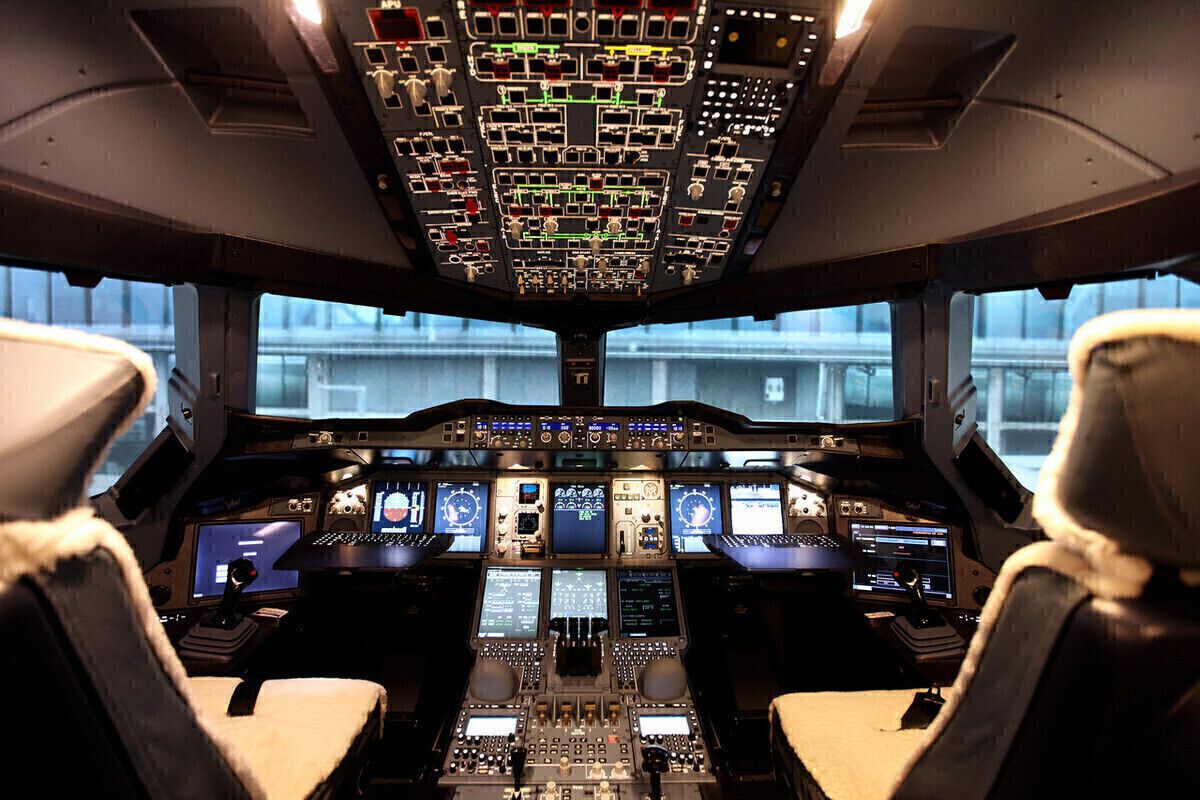
Photo: British Airways
Джерело інформації: Simple Flying