Zero Emission Aviation Could Be A Reality In The UK In 20 Years
A new study from Cranfield University shows that the transition could happen sooner than previously anticipated.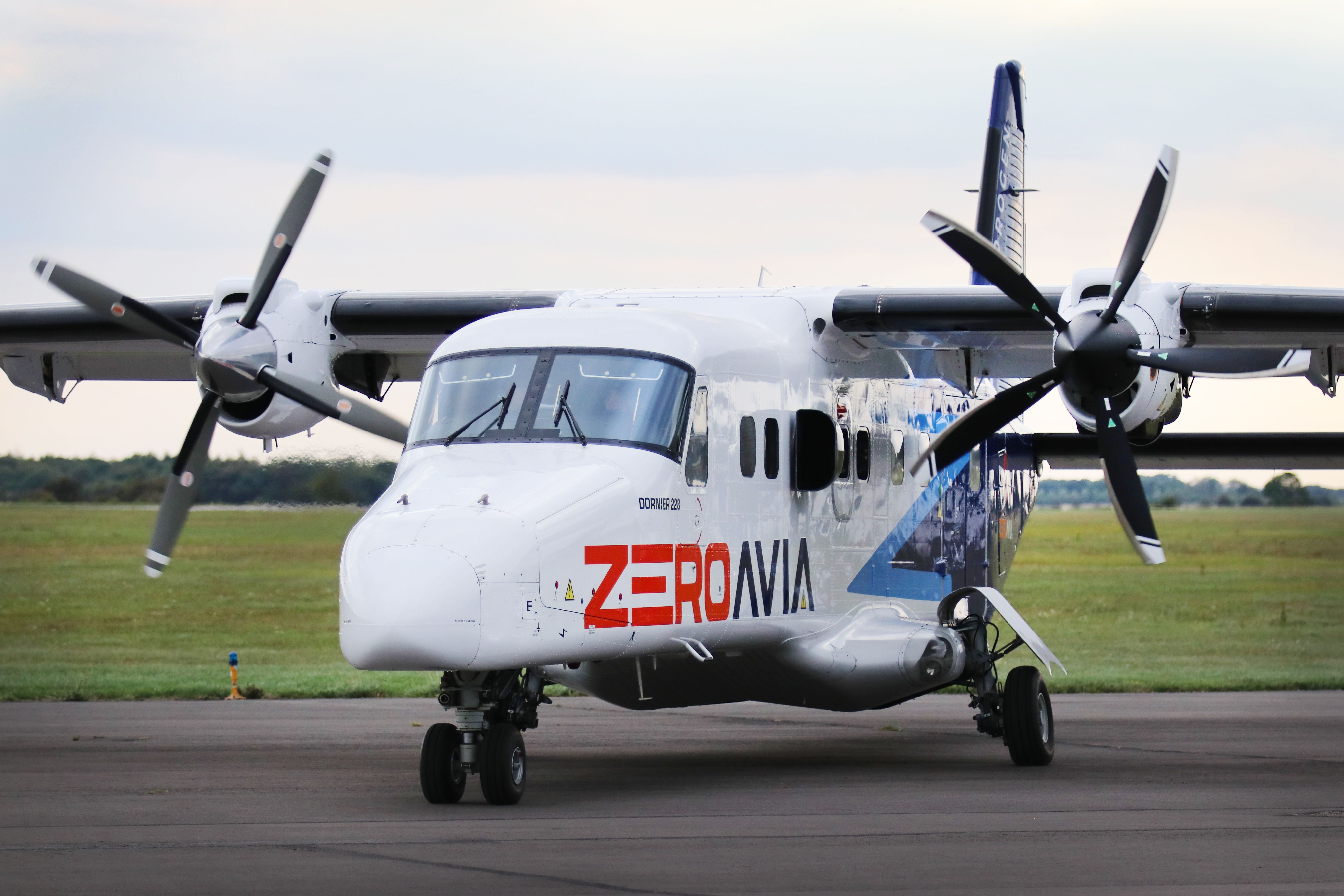
Photo: ZeroAvia
The fact that aviation is, while being an incredibly hard-to-abate sector, gathering momentum towards decarbonization can hardly have escaped anyone interested in the industry. Neither has the notion that regional air travel will be the first to see significant changes and application of novel propulsion technology. And it may come sooner than expected.
Read more: Annual Cost Of Ground Damage To Aircraft Could Reach USD 10 Billion Without Action
According to a new study presented by Cranfield University, passengers could be flying between regions in the UK on zero-emission planes within the next 20 years. However, it is also calling for a national hydrogen strategy to address the challenges faced by the aviation industry.
As part of the UK's Research and Innovation’s Future Flight Challenge, Cranfield researchers have worked with aerospace manufacturers, airports, and other academic institutions on a project called the New Aviation Propulsion Knowledge Innovation Network, or NAPKIN, for short.
Dr Thomas Budd, Senior Lecturer in Airport Planning and Management, commented on the study,
“Aviation is not the UK’s only industry considered hard to decarbonise which is seeking to develop a zero emissions future founded on hydrogen. To make zero emissions air travel a reality, it is essential that industry, academia, and government work productively to review aviation’s place within the broader UK hydrogen strategy. Excitingly, research as part of NAPKIN has shown that this future may be sooner than many may have originally thought.”
The study is the most comprehensive to date, looking at what a trajectory to a zero-carbon domestic aviation industry in the UK could look like until 2040. It anticipates that the first hydrogen-powered aircraft could be flying commercially by 2026. These planes will seat between 7 and 19 people. According to the timeline of a Cranfield Aerospace Solutions partner - ZeroAvia, the intention is to operate the first commercial passenger flight between the UK and the Netherlands as soon as 2024.
Missing opportunity for hydrogen leadership?Meanwhile, the study is warning decision-makers that while the UK could become a world leader in hydrogen-powered flight, its plans when it comes to production and infrastructure are lagging behind those of, for instance, Germany and France. By 2040, the UK aviation sector may require as much as 300,000 tonnes of green hydrogen from renewable sources.
Currently, there is no significant domestic production, although the "Hydrogen Strategy" launched last year lays out plans for government and industry to work together to develop at least 10 GW of "low-carbon" hydrogen production, which should be able to produce between 800 000 and 1 million tonnes of hydrogen per year. However, aviation is by far not the only industry that will want to get its hands on it.
Project NAPKINThe UK aviation consortium behind Project NAPKIN consists of three airports (Heathrow, London City, Highland and Islands Airports Limited - HIAL), three manufacturers (GKN Aerospace, Rolls-Royce, Cranfield Aerospace Solutions), three academic institutions (UCL, Cranfield and Southampton) supported by Deloitte and three airlines (easyJet, British Airways and Loganair).
Джерело інформації: Simple Flying