19 Years Ago Today Flash Airlines Flight 604 Crashed Into The Red Sea
How did a Boeing 737-300 fall out of the sky just three minutes after takeoff?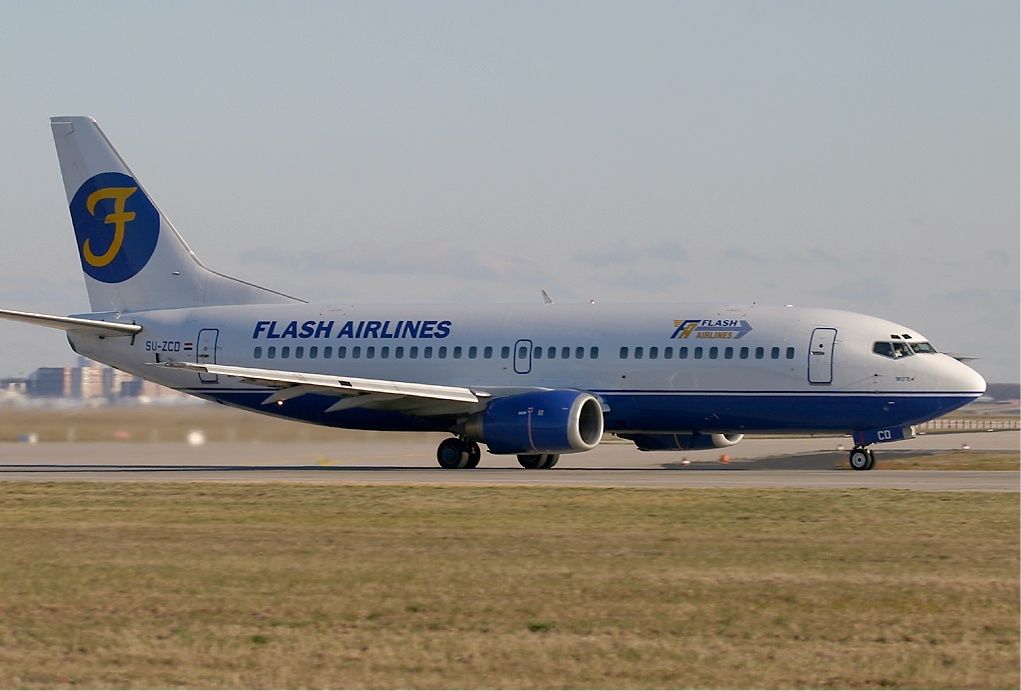
Photo: Konstantin von Wedelstaedt via Wikimedia Commons
On the southern tip of the Egyptian Sinai peninsula lies Sharm El Sheikh, a domestic and European tourist destination city. Flash Airlines Flight 604 departed Sharm El Sheikh International Airport in the early morning of January 3, 2004, to bring mainly French holidaymakers back to Paris Charles De Gaulle International Airport. The plane made one left turn before the plane banked to the right and crashed into the Red Sea just a couple minutes into the flight. What could have caused this?
The weather early that morning near the coastal city was perfect for flying, with no visibility issues, about 17 degrees Celsius, and a slight breeze. The captain for this flight had around 7,400 total flying hours, of which 474 were on the 737. His first officer had only 788 hours total and 242 on the type.
Flash Airlines was established as Heliopolis Airlines in 1995 before merging with the Flash tour group and rebranding. At the time of the accident, the airline had just two Boeing 737-300 forming its entire fleet. Flight 604 was a chartered passenger flight that would take travelers from Sharm El Sheikh to Paris, with a stopover at Cairo International Airport along the way.
Takeoff for CairoFlight 604 took off into the darkness at 04:42 local time with 135 passengers and 13 crew onboard. Mountainous terrain defines the land west of the city, so the pilots initiated a left-hand turn to gain altitude before heading northwest toward Cairo. As the plane gained altitude, it was supposed to continue turning over the Red Sea, intercept the 306 radial from the airport VOR station, then fly over the mountains.
The pilots turned left over the Red Sea after reaching 1,000 feet, after which the captain called for the autopilot to be engaged. Just a few seconds later, as the first officer responded with, “Autopilot in command, sir,” the captain made an exclamation in Arabic before the first officer turned off the autopilot. The captain then asks for the heading select mode to be engaged, which the first officer does.
When heading select mode was engaged, the aircraft leveled off, coming out of the left-hand turn, then began banking to the right. The airplane continued to increase its right-hand bank angle as the captain and first officer discussed what was happening without taking action. At a maximum height of 5,460 feet, the bank angle increased to 50 degrees.
As the airplane continued to roll, reaching a maximum of 111 degrees to the right, the two pilots fought to escape the situation. The master caution light turned on as the captain asked for autopilot, and the first officer pointed out they were in a severe right bank. An observer in the cockpit suggested the pilots reduce power which did initially help get the plane back under control.
Crash and final remarksOver the next few seconds, the final report records left aileron movement and idle thrust that assist in recovery. But it was too late. In the next couple of seconds, the overspeed warning and ground proximity warning sound off before the plane impacts the Red Sea at 416 knots in a 25-degree nose-down position.
Investigations by Egyptian, French, and US authorities, unfortunately, provide no probable cause for the incident. The Egyptian Ministry of Civil Aviation reports a list of findings in the final report, including multiple aircraft system faults, spatial disorientation, and confusion concerning communication in the flight deck. But as the end of the conclusion states, “Although the crew at the last stage of this accident attempted to correctly recover, the gravity of the upset condition with regards to attitude, altitude, and speed made this attempt insufficient to achieve a successful recovery.”
Джерело інформації: Simple Flying