Everything You Need To Know About Airline Standard Operating Procedures
The procedures that allow pilots to work in operational harmony.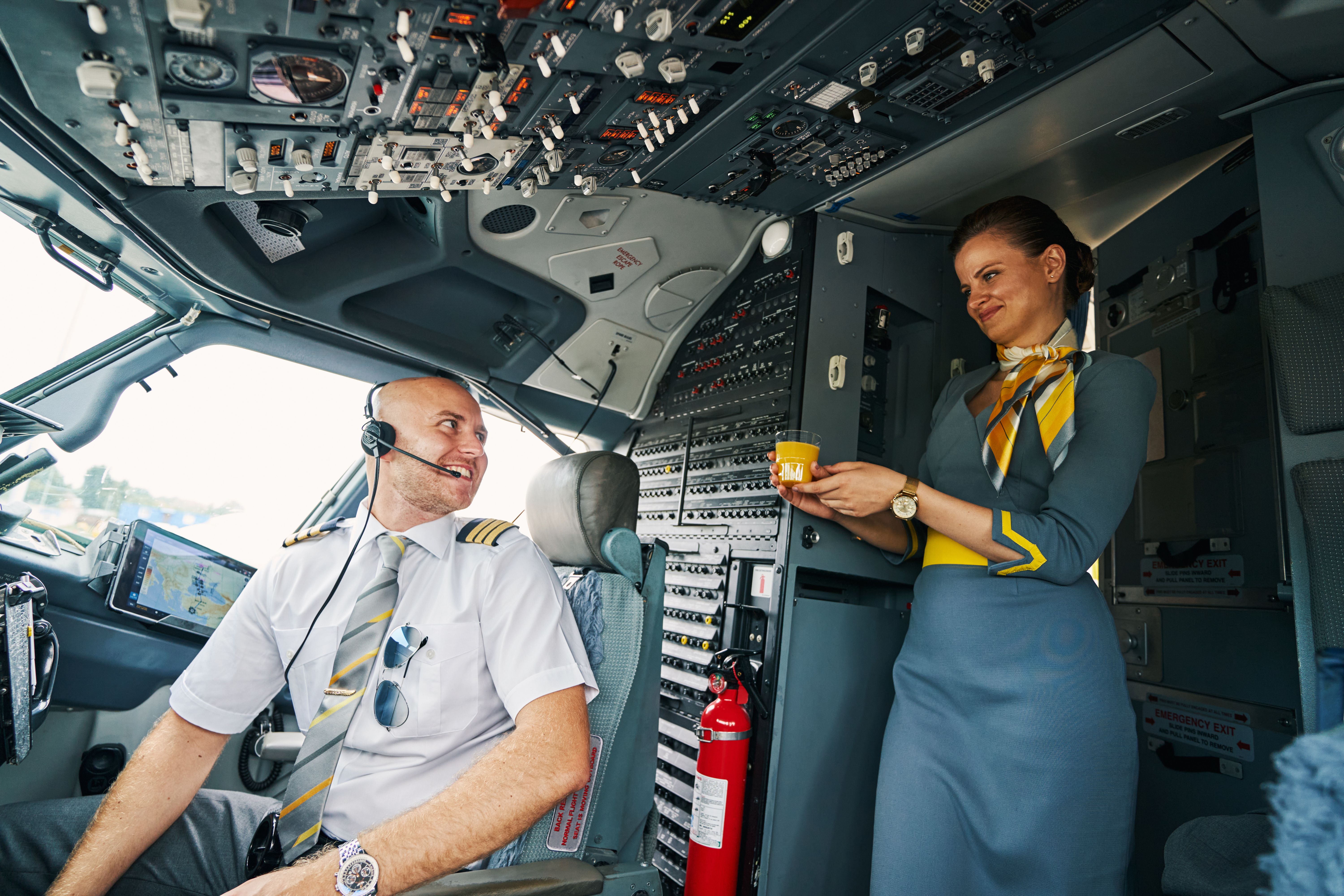
Photo: Svitlana Hulko I Shutterstock
Airline pilots fly with unfamiliar colleagues on a very regular basis. Usually, a lack of personal familiarity would be detrimental to performing high-order tasks. The airlines have carefully crafted a solution to this lack of familiarity over the years. Standard operating procedures (SOPs) allow two pilots to work together as if they had done so countless times beforehand. Let's talk about the power of SOPs.
What are SOPsStandard operating procedures can be considered a blueprint for operating an aircraft according to an airline's requirements. Pilots diligently abide by their company's SOPs from the moment they step on an aircraft to power it up until they walk off the aircraft after shutdown.
Airlines publish flight operations manuals that span hundreds (sometimes thousands) of pages to detail how exactly pilots are expected to operate the aircraft. A sentiment often heard in the industry is that the airline owns the planes, and pilots fly them exactly how the airline specifies it ought to be done.
SOPs rely on pilots understanding their roles as choreographed by the operations manual. One of the most significant reasons that pilots attend annual training is to ensure that we know and apply the "script" outlined in the operations manual and validate our flying abilities. The script that SOPs depend on is built by "flows and triggers." "Flows" are memorized actions each pilot carries out at specific, predetermined instances. These instances are the "triggers."
Flows and triggersFlows and triggers are used at many junctures in accordance with SOPs. One example is the following scenario: The lead flight attendant comes to the flight deck after boarding has completed and the passenger count has been conducted. There is a very specific verbiage the flight attendant recites to the captain. Likewise, the captain has an exact vocabulary, such as "cleared to close" or "good to go" that serves as the trigger to conduct flows.
The flight attendant closes the flight deck door, and the first officer and captain perform their respective "before start flows." Actions accomplished during this flow might be ensuring the flight deck door is locked, checking that all doors and panels are closed, and turning on the transponder.
After completing their flows, the crew verifies what they have done with a checklist. Other triggers include completing both engine starts, passing 10,000 feet, climbing and descending through 18,000 feet, and clearing the runway after landing. Each of these moments requires words to be recited and actions to be accomplished by the SOP script.
Non-normal SOP usageSOPs are most commonly used during normal flight operations, but non-normal and emergencies have SOPs to follow. For example, an engine failure on takeoff has immediate action items and callouts that must be performed by memory before referring to the QRH emergency checklist. The sequence in which tasks are accomplished and how the QRH checklist is read and accomplished are very precisely choreographed by SOPs. The pilot's ability to follow SOPs is analyzed after any emergency because adherence to procedures significantly determines the event's outcome.
Джерело інформації: Simple Flying