Pig (Fats) Do Fly: Sustainable Aviation Fuel Shortfall Raises Questions About Sources Of Feedstocks
What's fueling your flight? And if there aren't enough dead pigs, what will producers use as an alternative?
Photo: Ivan Marc | Shutterstock
There’s been a bit of an uproar in the past few days over what actually goes into sustainable aviation fuel. We all know it is made from waste products and/or renewable biomass, but were you aware much of those waste products are actually dead animals?
The fat of pigs, chickens and cattle is considered waste for the food production industry, therefore meets the criteria for raw feedstock for SAF. Calculations by the BBC suggest that fueling an entire flight from Paris to New York with animal-based SAF would require 8,800 pigs for that one flight alone.
Of course, 100% SAF flights are a way off yet, but given the EU target of 6% of SAF by 2023, that’s still a lot of sustainable fuel required. The EU says 1.2% of this 6% SAF fuel must come from e-kerosene - if the other 4.8% is from animal fats, that transatlantic flight would require 400 pigs for fuel.
While animal fats might be a concern for vegans wanting to travel, for most, it’s just fat and doesn’t affect our flying experience.
The problem comes when we consider just how much demand there is going to be for raw feedstocks to produce SAF in the coming years, given how most of the aviation industry sees this as a short-term solution to CO2 reduction while more sustainable aircraft are in development
Not enough dead animalsA study by a Brussels-based clean transport campaign group - Transport & Environment - suggests that the demand for aminal fats for SAF will triple by 2030. They say that not enough animals are being slaughtered to meet this demand, and that producers will have to look elsewhere for fats for SAF.
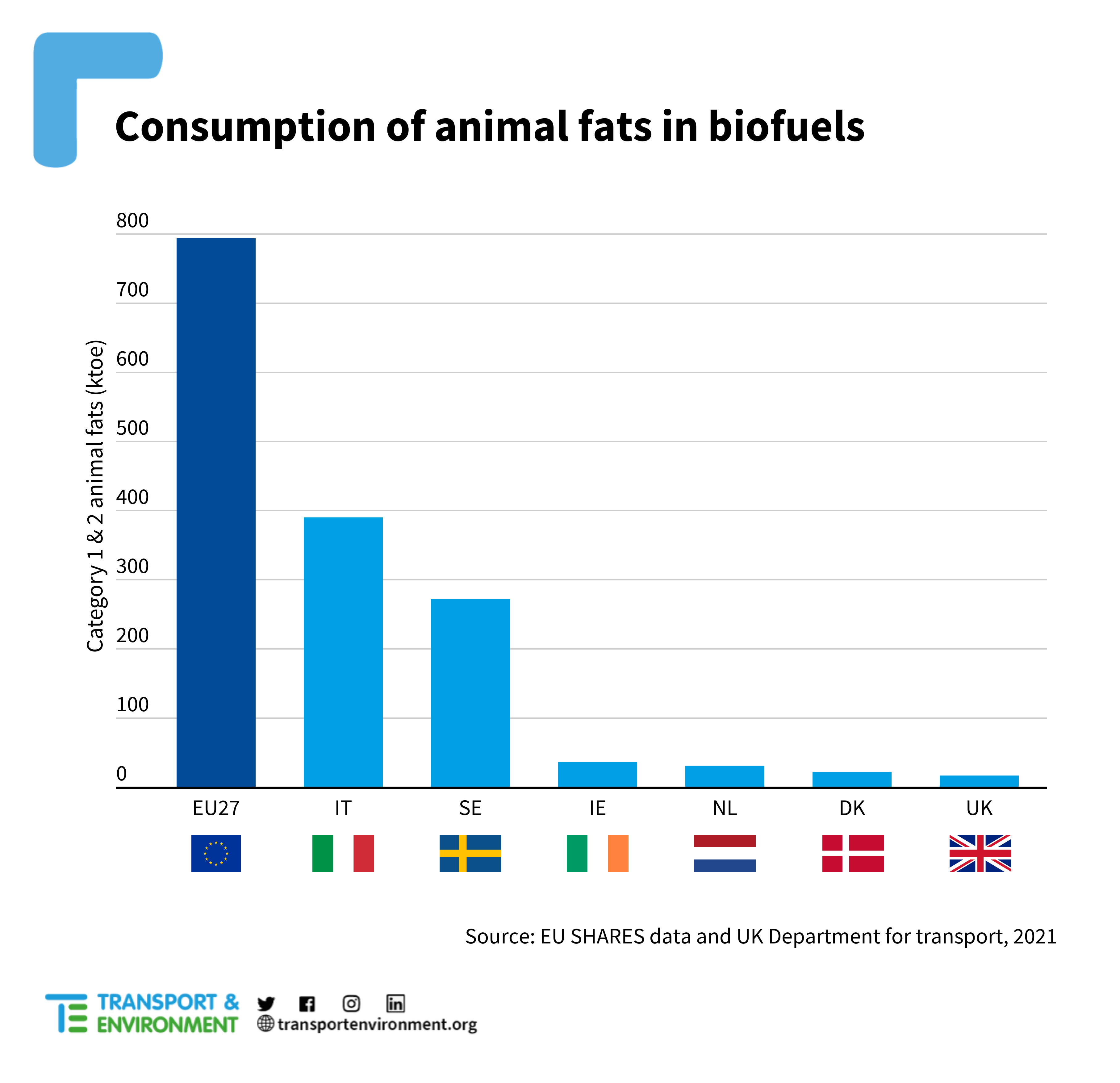
Graphic: Transport & Environment
The worry is that one of the most readily available alternative sources of fat is palm oil. Palm oil is made from the fruits of trees called African Oil Palms. It is produced in vast plantations in tropical countries, which require the clearance of thousands of acres of mature rainforest to grow.
This not only destroys habitats for some of the world’s most endangered species, but also removes one of the biggest carbon stores on the planet. Often, rainforest trees are burned, releasing all that stored carbon into the atmosphere.
It also comes with human rights issues like forced labor and the displacement of Indigenous forest communities.
Are producers really considering palm oil for SAF?Transport & Environment believes that SAF producers will turn to palm oil as a readily-available, cheap solution. We asked some producers for their take on this.
World Energy was the world's first producer of sustainable aviation fuel, and has been leading the way in SAF and renewable fuels for more than 25 years. The company told us,
"We use a wide range of lipids for our SAF, all of which are RSB certified. That means we don’t use palm oil and never will. RBS certification is a standard that ensures ethical, sustainable and credibly-sourced biomaterials for fuel production."
Neste is a Finnish company that provides renewable diesel and sustainable aviation fuel. The firm admits it uses used cooking oil and animal fat waste to produce its SAF, but notes that this is a blend that can be rather unpredictable. It shared that the exact raw materials (used cooking oil and/or animal fat waste), their shares used for SAF production and the origin of raw materials used vary over time depending on raw material availability, price, customer demand, and market requirements (e.g. regulation). However, these always meet the legal sustainability requirements set by local authorities in its markets.
Neste’s view is that the wider the variety of sustainably-sourced renewable raw materials that can be used in the production of SAF, the larger amounts of fossil fuels can be replaced with renewables to significantly reduce the greenhouse gas emissions resulting from fossil fuel use.
Such flexibility in the use of sustainably-sourced raw materials also supports the SAF production capacity investments and production capacity growth needed to meet the aviation sector’s ambitious climate targets.
However, Neste also said that it intends to stop the use of palm oil entirely by the end of this year. It further clarified that it is focusing on the following promising new feedstocks: lignocellulosic raw materials (plant dry matter), municipal solid waste, algae, and PTL (power to liquid or e-fuels).
Pigs will fly... or notTransport & Environment (T&E) maintains that animal fats being used in SAF is on the rise, and is sounding alarm bells about the disparity in supply and demand and the potential for palm oil to fill the gap. Barbara Smailagic, biofuels expert at T&E commented,
"It turns out pigs will fly… For years we've been burning animal fats in cars without drivers knowing. Now they will be fuelling your next flight. But that can't be sustained without depriving other sectors, which will in turn likely switch to damaging alternatives like palm oil. We need greater transparency so that consumers know what is going into their tanks and fuelling their flights."
Our research suggests that, at least for the companies we’ve heard from so far, this isn’t necessarily true.
Джерело інформації: Simple Flying