How Many Boeing 747s Are Left?
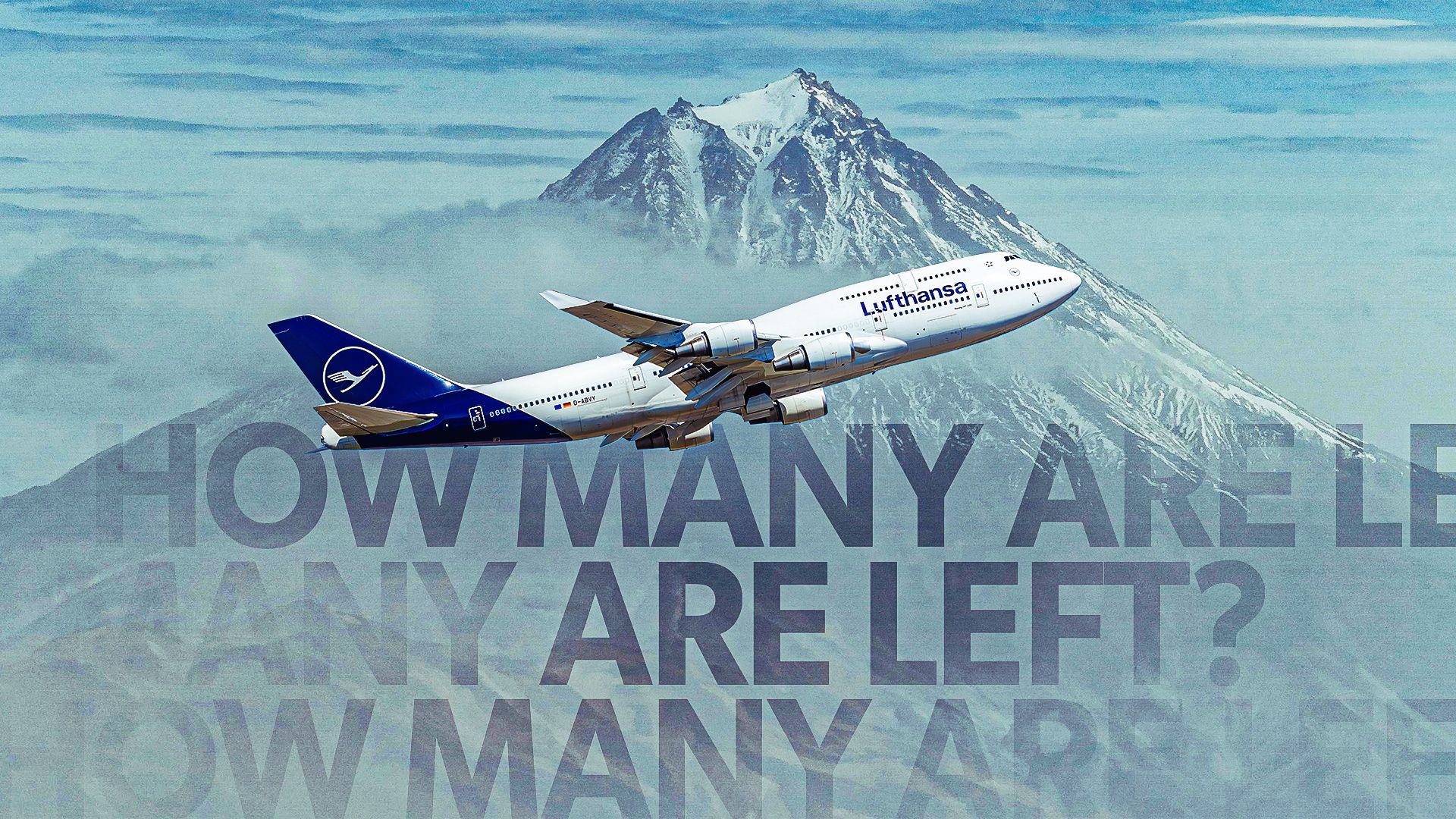
Boeing built a total of 1,573 Boeing 747 Jumbo family aircraft, with two Air Force One examples still pending delivery. The Queen of the Skies has been out of production for a few years now, and every year, more and more are retired. In a twist of fate, the Jumbo remained in production as a freighter for a couple of years after the rival Airbus A380 Superjumbo program was terminated.
The 747 stands as a testament to the superb engineering of Boeing in the 1960s and is one of the most successful widebody aircraft ever built. The Boeing 747 was designed as a passenger jet, but now it is far more popular as a freighter. As passenger Boeing 747s have retired, some have been converted into freighters, allowing them to have a new lease on life. So, how many Jumbos are left flying today?
End Of Jumbo ProductionThe Boeing 747 Jumbo first entered service in 1969 with Pan Am and soon became an icon of the airline and the Jet Age. From the initial Boeing 747-100, Boeing continued to update the Jumbo over the years, culminating with the Boeing 747-8/F. Finally, production of the Boeing 747 came to an end in 2023 as Boeing delivered the final example to Atlas Air in 2023.
Boeing only ever sold a modest number of Boeing 747-8s, with only 155 examples being delivered. Boeing delivered 1,473 Jumbos over the life of the project, but only around 100 aircraft were delivered between 2006 and 2023. Technically, while all Jumbos have been built, not all have been delivered. In 2013, the Russian airline Transaero signed a deal to purchase four Boeing 747-8s. However, the airline went bankrupt soon after the Russian annexation of Crimea.
While Aeroflot, Russia's flag carrier, took over most of Transaero's former fleet, it didn't take the orders for the expensive Boeing Jumbos. Two of these 747s (registered N894BA and N895BA) are now being retrofitted to be the next United States Air Force One presidential aircraft. Unless Boeing finds a way to accelerate their delivery, the final Boeing 747 may not be delivered until around 2029.
Final Passenger Boeing 747sThe last passenger jumbos in the United States were retired by United Airlines and Delta Air Lines in 2017, with most airlines following suit since then. For example, British Airways retired its Boeing 747s in 2020. The vast majority of Boeing 747s in commercial service today are freighters. But still, there are a limited number of Boeing 747-8s and Boeing 747-400s in commercial passenger service with airlines. Currently, this is confined to just four airlines.
The four airlines still operating scheduled passenger Boeing 747 flights are Korean Air, Air China, Lufthansa, and Rossiya. According to Planespotters.net, of Korean Air's 16 Jumbos in service, five (all 747-8s) are used for passenger services, with the rest used as freighters. The Air China Group operates 12 Boeing 747s as freighters, VIP transports, and passenger aircraft. Two Boeing 747-400s are used for passenger transportation, and these are expected to retire soon. It also has seven 747-8s, of which two are used for VIP transportation and five for passenger transportation.
|
Korean Air |
5 (747-8s) |
|
Air China |
7 (747-400 & 747-8s) |
|
Rossiya |
2 (5 in total, including parked, all 747-400s) |
|
Lufthansa |
27 (747-400s & 747-8s) |
Following a shortage of aircraft after Western sanctions on Russia in 2022, Russia's Rossiya Airlines has brought some Boeing 747-400s out of retirement to cover the shortage. Of the five -400s it has, it seems two may be operational.  Lufthansa is the largest operator. All of its fleet of 27 Boeing 747s is used for passenger transportation. These include eight 747-400s and 19 747-8s.
With deliveries of the jumbo jet having only ceased in recent years, the type looks set to continue flying for several decades to come.
Older Boeing 747 Variants FlyingOf the 1,473 Jumbos built, around 426 of them remain in service, although some may be unable to fly due to maintenance needs. These include a single 747-100, two 747SPs, 16 747-200s, two 747-300s, 255 747-400s, and 150 747-8s. For reference, including subvariants, a total of 205 Boeing 747-100s, 45 Boeing 747SPs, 393 Boeing 747-200s, 81 Boeing 747-300s, 694 Boeing 747-400s, and 155 Boeing 747-8s were built.
The last Boeing 747-100 is used by the Iranian Air Force. That aircraft (registered 5-8107) is now 54 years old. It was withdrawn from use and stored in 2015, but returned to service in October 2023. Meanwhile, Pratt & Whitney operates the two remaining Boeing 747SPs. These shortened Jumbos are used as flying testbeds for developing and testing new aircraft engines. Separately, the British ejection seat manufacturer, Martin Baker, still operates two Gloster Meteor jet fighters as testbeds. Gloster Meteors were the second jet fighter to enter service in WWII.
|
Boeing 747-100 |
205 |
1 |
|
Boeing 747SP |
45 |
2 |
|
Boeing 747-200 |
393 |
16 |
|
Boeing 747-300 |
81 |
2 |
|
Boeing 747-400 |
694 |
255 |
|
Boeing 747-8 |
155 |
150 |
Six of the 16 Boeing 747-200s remaining in service are used by the United States Air Force as the two Air Force One jets and four E-4 Nightwatch "Doomsday" aircraft. Another one (registered N787RR) is an engine testbed for Rolls-Royce North America. Another six are operated by airlines based in Kyrgyzstan, Georgia, and Moldova, while the final three are found in Iran. Two 747-300s are still operational, one in Iran and one as a cargo aircraft in Belarus.
Boeing 747-400s & 747-8s Still FlyingThe Boeing 747-400 is the most produced variant of the Jumbo family and makes up the bulk of the 747s still flying today. Of the 694 examples built, around 255 are still flying today. Of these, the majority are freighters, including freighter conversions. The largest operator of the type is Atlas Air, which has a total of 48 Boeing 747-400/Fs in service as well as another 13 examples of the newer 747-8F, giving it a total fleet of 61 Jumbos.
The next largest operators are Kalitta Air with 22 Boeing 747-400Fs, Cargolux with 16, UPS with 13, and Asiana Airlines with 12. All of these are used for cargo transportation. When it comes to the 747-8F freighter variant, UPS is the largest operator with 30 in service. Together with its 13 Boeing 747-400Fs, UPS is operating a total of 43 Jumbos, meaning the giant has 10% of all the world's remaining Jumbos. Next are Cargolux and Cathay Pacific with 14 Boeing 747-8Fs each, followed by Atlas Air with 13 and AirBridgeCargo with 10.
|
Atlas Air |
48 |
UPS: |
30 |
|
Kalitta Air |
22 |
Lufthansa: |
19 |
|
Cargolux |
16 |
Cargolux: |
14 |
|
UPS |
13 |
Cathay Pacific: |
14 |
|
Asiana Airlines |
12 |
Atlas Air: |
13 |
When it comes to the Boeing 747-8i, the passenger variant of the -8 series, Lufthansa has the most with 19 in service. This is followed by Air China with 7, Korean Air with 5, Qatar Amiri Flight with two, and the United States Air Force with two. Some of these 747-8i variant aircraft are used for VIP transportation and not for scheduled commercial passenger transportation.
Fate Of Retired Boeing 747sAs with all families of retired commercial aircraft, the most common fate of the Boeing 747 is to be recycled and scrapped. This is what happened to British Airways' fleet of Boeing 747s after they were retired in 2020. However, some have also been lost to accidents over the years. A total of 64 Boeing 747s have been written off in hull loss accidents. This represents around 4% of all the 747s built.
Meanwhile, more have been preserved, converted into restaurants, stored, or abandoned. A 2021 list by the SAA Museum details around 60 "interesting Boeing 747 aircraft – including... cockpits, fuselage sections, parts, and some abandoned ones." Some of these (like the British Airways aircraft listed) have since been scrapped. Since then, more 747s have been retired.
One example of a notable preserved Jumbo is at the Space Center Houston. There, at Independence Plaza, visitors can see a replica space shuttle mounted on top of one of the two Boeing 747 Shuttle Carrier Aircraft (registered N905NA). The other Shuttle Carrier (N911NA) is preserved at the Joe Davies Heritage Airpark in California. Another interesting preservation is Jumbo Stay at Sweden's Stockholm Airport. There, people can spend the night in hostel-style accommodation in a decommissioned Boeing 747-200.
Outliving The Airbus A380Around 29% of the Boeing 747s built are still active. Many more are in storage or derelict, while hundreds have been scrapped. Around 4% were lost in accidents over the years. The Boeing 747 continues to operate in scheduled passenger service with four airlines around the world. However, these days will soon be coming to an end. Air China, Lufthansa, and Korean Air are itching to retire them after delayed replacement widebody aircraft arrive, while Rossiya only reactivated them due to sanctions.
More Boeing 747s are used for VIP transport in the United States, China, Qatar, and elsewhere, and a very few are private jets for exceptionally wealthy individuals. The vast majority of the approximately 426 Jumbos still flying today are operated as freighters. Atlas Air, with a total of 61 examples, has around 14% of the remaining operational Jumbos, while UPS operates around 10% of the world's fleet.
Jumbos are expected to continue flying after the last of the rival Airbus A380 Superjumbos are retired. While the A380 will likely operate as a passenger aircraft after the last passenger 747s are withdrawn, it is ill-suited as a freighter or VIP transport aircraft. This suggests that the 747, as a freighter and special mission aircraft, will continue flying for years after the last A380s are grounded.
Джерело інформації: Simple Flying