This Is How Fast The Boeing 747-8 Can Fly
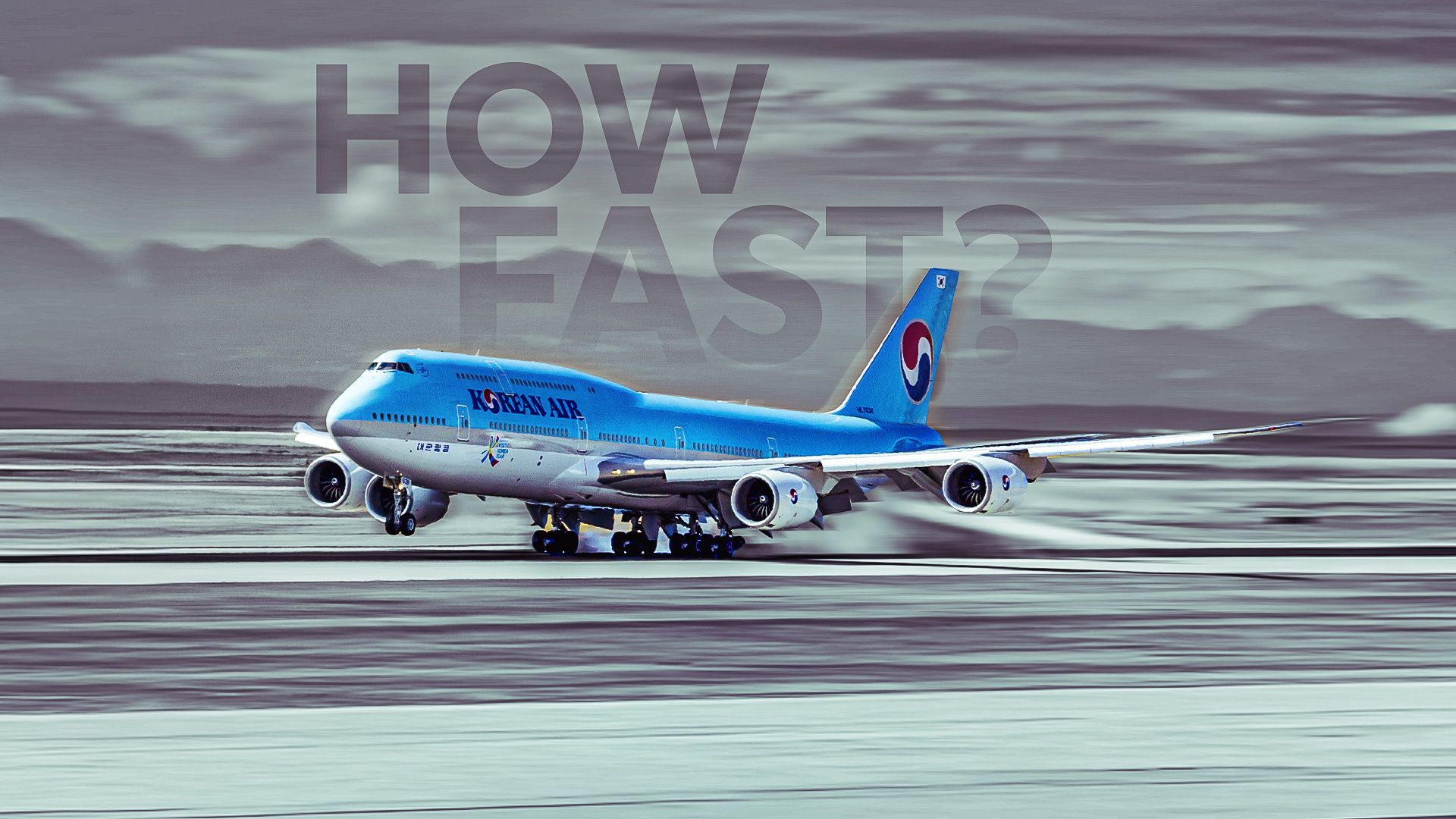
The Boeing 747 is famous for its sheer size, an icon of American engineering and aerospace innovation. What many non-aviation professionals may not be aware of is just how well-loved the plane is for its exceptional handling and powerful engines, which make it one of the fastest commercial planes in the sky. The Boeing 747-8 is the latest and greatest variant of the “Queen of the Skies,” as the 747 has been known since its debut, and it boasts a cruise speed of 659 mph (1,061 kmh).
The 747-8 is most renowned for its sheer size and capacity, and that same power is the reason for its ability to achieve remarkable air speeds. The engineering that went into its aerodynamics and mighty engines gives it the power to haul loads that few other aircraft in the world can match, and also hit the highest air speeds of any Boeing jet flying in the friendly skies today.
747-8: Last Dance Of The Queen Of The SkiesAlthough the famed 747 is best known for its luxurious passenger model, the freighter variant of the final model in the series was both the first to take flight and the last to leave the factory before the assembly line closed down for good. The -8 had a 15-year production run, during which over 150 of the colossal jets were made. The very first 747s were delivered to their launch customer, Pan Am, in the 1960s and took the world by storm. However, the leviathan of airliners slowly lost popularity as the decades passed.
The iconic super-jumbo slowly lost its pull on the market as rising fuel costs prompted many airlines to turn to more fuel-efficient twinjets as a cost-saving fleet alternative. The final sale of a 747-8I, “I” for “intercontinental,” which is the passenger version, was to the United States Air Force (USAF) in 2017. The cargo model, 747-8F, received orders earlier than the -8I and stayed in production longer, with the last four aircraft all going to Atlas Air.
There are many 747s still cruising the skies today. However, the majority have been retired or converted to freighter usage. Even in that role, it is becoming a niche platform as widebody twinjets continue to take more market share every year. The power and speed of the 747 give it an advantage for specialized operators that demand the most from their aircraft. The 747-8F, “F” for “Freighter,” remains top of its class in many ways, and both its operators and crews still herald its many qualities even in the modern era of commercial aviation.
Double-Decker Boeing: Power And GracePilots of the 747 have said that it makes the best landing of any airliner in the sky, and it handles better than a lightweight Cessna. Test pilots Curt Gottshall and Kirk Vining detailed to Flying Magazine just how gentle of a giant the 747-8 really is in a special report. Vining commented on his experience flying tests in the 747-8:
“I tested high speed and low speed in the 747-8, and demonstrated full aerodynamic stalls. It stalls at full aft stick even better than a Cessna 172. It’s an amazingly light and flexible airplane for its size, so we designed the fly-by-wire ailerons [in the 747-8] to automatically help dampen out any vibrations and smooth out the ride.”
|
Passengers |
410 |
|
Range |
13,650 km / 7,370 nmi |
|
Length |
76.3 m (250 ft 2 in) |
|
Wingspan |
68.4 m (224 ft 5 in) |
|
Height |
19.4 m (63 ft 6 in) |
|
Cruise Speed |
Mach 0.86, 659 mph (1,061 kmh) |
|
Total Cargo Volume |
6,225 ft3 (175 m3) |
|
Aisles |
2 |
|
Maximum Takeoff Weight |
447,700 kg / 987,000 lb |
The production of the Boeing 747 is one of the longest continuous runs for any commercial aircraft, surpassed only by some of the most prolific aircraft, such as Boeing’s own 737 series. The assembly line ran from 1968 to 2023, or 55 years! As the global fleet is ever-shifting, it can be hard to pin down an exact number, but between the passenger models flown by Korean Air or  Lufthansa and the freighters of Atlas, Cathay Pacific, UPS or Kalitta Air - there’s about 350 still flying, according to Planespotters.
The biggest of the Boeing jets, the 747, was made to go further and faster than anything else too. Pan Am was the launch customer when the plane made its debut in the middle of a golden era in aviation. The aviation sector was booming, and new technology was emerging at breakneck speed. Airlines couldn’t get the huge jets fast enough, and every major carrier wanted at least one to be the flagship of its fleet. At a time when quality was key, not cost-efficiency, every customer, carrier, and crew member was happy to climb on the majestic 747.
Being fast was a great selling point in the 747s heyday. The jet age had only recently dawned, and the flyers of the day would be eager to book their flight on the fastest jet on the flightline. The Concorde would come later, but with its supersonic speed and tiny passenger capacity, it was playing an different game altogether. The crews of 747s also appreciated how flexible it was to fly and how easy it was to manuever for its size. Test pilot Curt Gottshall had nothing but praise for the Queen of the Skies:
“The 747—even at that large of a mass—is very maneuverable, so you have quite a large operational window. People think that you have to plan hundreds of miles in advance—it is true that if you want to have a perfect, steady trajectory, you need to think ahead. But it does have the capability and the maneuverability to make corrections and make them fairly aggressively. With the exception of the last thousand feet on the approach; you don’t want to be aggressive—you want to stay in that stabilized approach criteria.”
As The War Zone covered in a 2020 report, slowing demand for the huge and fast super jumbo jet coincided with the Coronavirus Pandemic and 737 MAX groundings that hurt Boeing’s commercial business side severely. Shuttering the assembly line for the 747-8 freed up facilities, staff and cash to reinvest in newer models like the 787 Dreamliner and 777X. The perfect storm of economic and logistical forces hit the majestic jetliner as it was already approaching its natural sunset, but its survivors and legacy continue to thrive.
Any Mission, Any Time: 747-8 FreighterIn terms of raw lifting power, the only contestants that can stand toe-to-toe with the 747-8F are incredibly rare airlifters, such as the Lockheed C-5M Galaxy,Antonov An-225, or An-124. The 747-8F was made in far greater numbers than any of its competitors, and on an interesting side note, the Airbus A380 was never made into a pure cargo variant. The A380 is seen as the direct competitor to the 747-8 in many ways, but it was solely focused on passenger service, and the airframe was deemed uneconomical to modify for freighter use.
The 747-8F and even older models of freighter 747s are expected to keep flying for decades. Boeing even has a partnership with Atlas Air to fly a special model with the largest cargo bay of any 747: the Dreamlifter. The Dreamlifter, based on the 747-400 passenger plane, is an integral part of supporting the 787 Dreamliner, which is one of Boeing’s most modern, widebody twinjets and is in extremely high demand with carriers all over the world. From its exceptional capacity as an airmail hauler to its unique ability to fulfill special missions, the 747 freighter will remain a prized asset to operators worldwide for many years to come.
VC-25B: The Next Generation Air Force OneTechnically, the 747 isn’t quite done yet, as Boeing is still working on the retrofitting of two 747-8I jets originally made for Transero and still undergoing conversion modifications. The delayed delivery has brought a Qatari 747-8 Boeing Business Jet (BBJ) into the mix as a potential interim Air Force One. There is another, less-known program underway by the US Air Force as well to build a new Survivable Airborne Operations Center (SAOC) that will replace the aging E-4B “Nightwatch” platform.
The VC-25B has been in the headlines repeatedly since President Donald Trump signed the USD 3.9 billion USD contract in 2018 for new VVIP jets with his personally selected livery. The program has faced seemingly endless delays and bottlenecks, which have been exacerbated by the impact of the Coronavirus Pandemic on the global aviation industry and supply chain. Despite sending Elon Musk to review the project status, the latest Air Force One is not anticipated to be seen on the flightline at Andrews Air Force Base until 2026.
The E-4B is officially called the National Airborne Operations Center (NAOC), and its mission is considered to be a “Doomsday” scenario. The reason for that is that the leaders of the US military and government must take to the sky in a small fleet of four of these special super-jumbo jets that are hardened and equipped to be a flying command post amid a nuclear war. As a 2024 report by Air & Space Forces Magazine details, the USAF issued a USD 13 billion contract to the Sierra Nevada Corporation to replace the original 747-200-based legacy aircraft with all new planes based on 747-8s.
Джерело інформації: Simple Flying